


When I started Kogel in 2014, I didn't set out to build the world’s most colorful derailleur cages. I set out to solve a much more fundamental problem: the friction hiding inside your bottom bracket and wheel hubs.
The foundation of everything we do—including every Kolossos that leaves our facility today—is the ceramic bearing. But the journey from our first prototype to the lineups we offer now has been a decade-long journey in materials science and real-world durability.
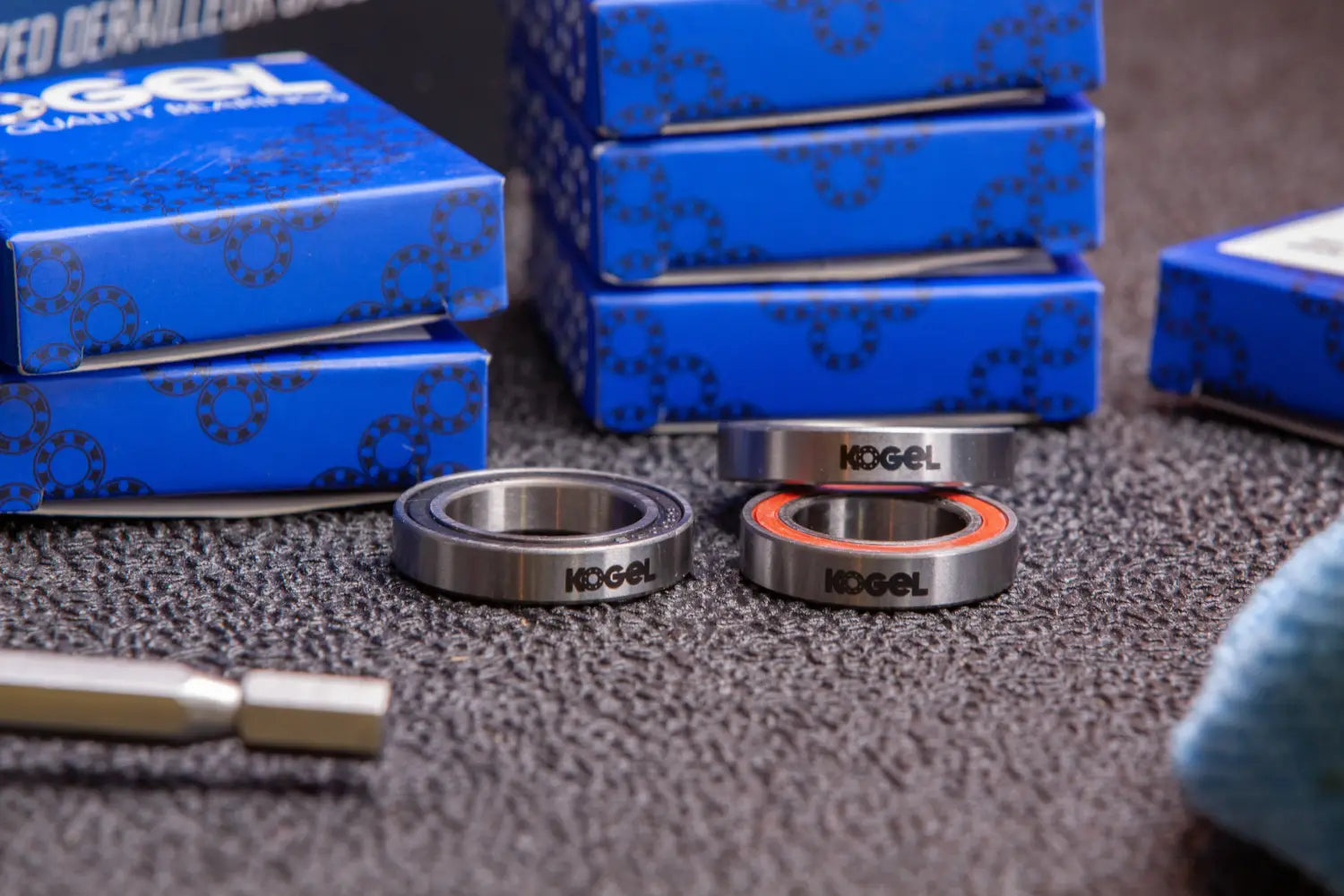
2014: The OG Kogel Ceramic
In the early days, our mission was simple: provide high-quality ceramic bearings that didn't cost a month's rent. Our original bearings use high-grade Silicon Nitride ceramic balls paired with hardened chrome steel races.
The performance jump was immediate. Ceramic balls are rounder, harder, and smoother than their steel counterparts. Because they don't deform under load, they reduce rolling resistance significantly. However, as we saw these bearings go out into the wild—particularly into the hands of riders who, like me, don't stop riding just because the weather turns sour—we noticed a recurring challenge.
Hardened chrome steel is fantastic for speed, but it has a weak spot: corrosion. While the ceramic balls themselves are impervious to rust, the steel tracks they run on are not. If water penetrates the seals, it creates tiny pits of oxidation. Once a race is pitted, that "silky smooth" feeling disappears, replaced by a gritty vibration that no amount of fresh grease can fix.
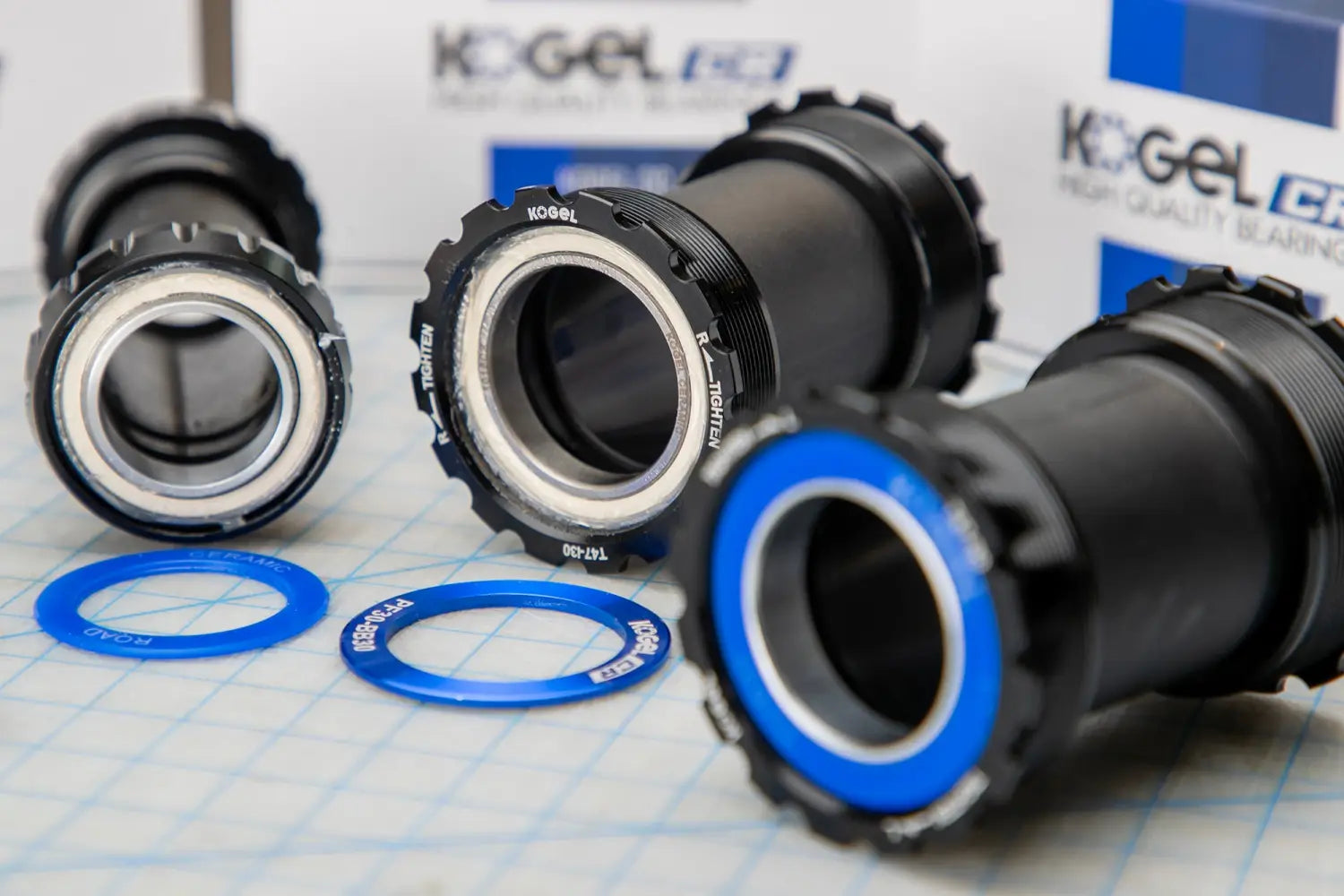
Eliminating Corrosion: developing the CR bearings
I knew that if Kogel was going to be a brand built on "Performance for Real Life," we had to solve the rust issue without losing the material hardness.
The solution sounds simple—use stainless steel—but the engineering was anything but. Most stainless steel is too soft; the incredibly hard ceramic balls would essentially damage the races under high loads.
Together with our manufacturer we spent two years perfecting the Kogel CR line (Corrosion Resistant). We developed a specialized heat-treatment process for stainless steel races, making them hard enough to withstand the pressure of our ceramic balls while remaining virtually immune to the elements. This became our gold standard. Whether you’re pressure-washing your bike after a muddy CX race or riding through sea mist on a coastal road, the CR bearings are designed to survive.
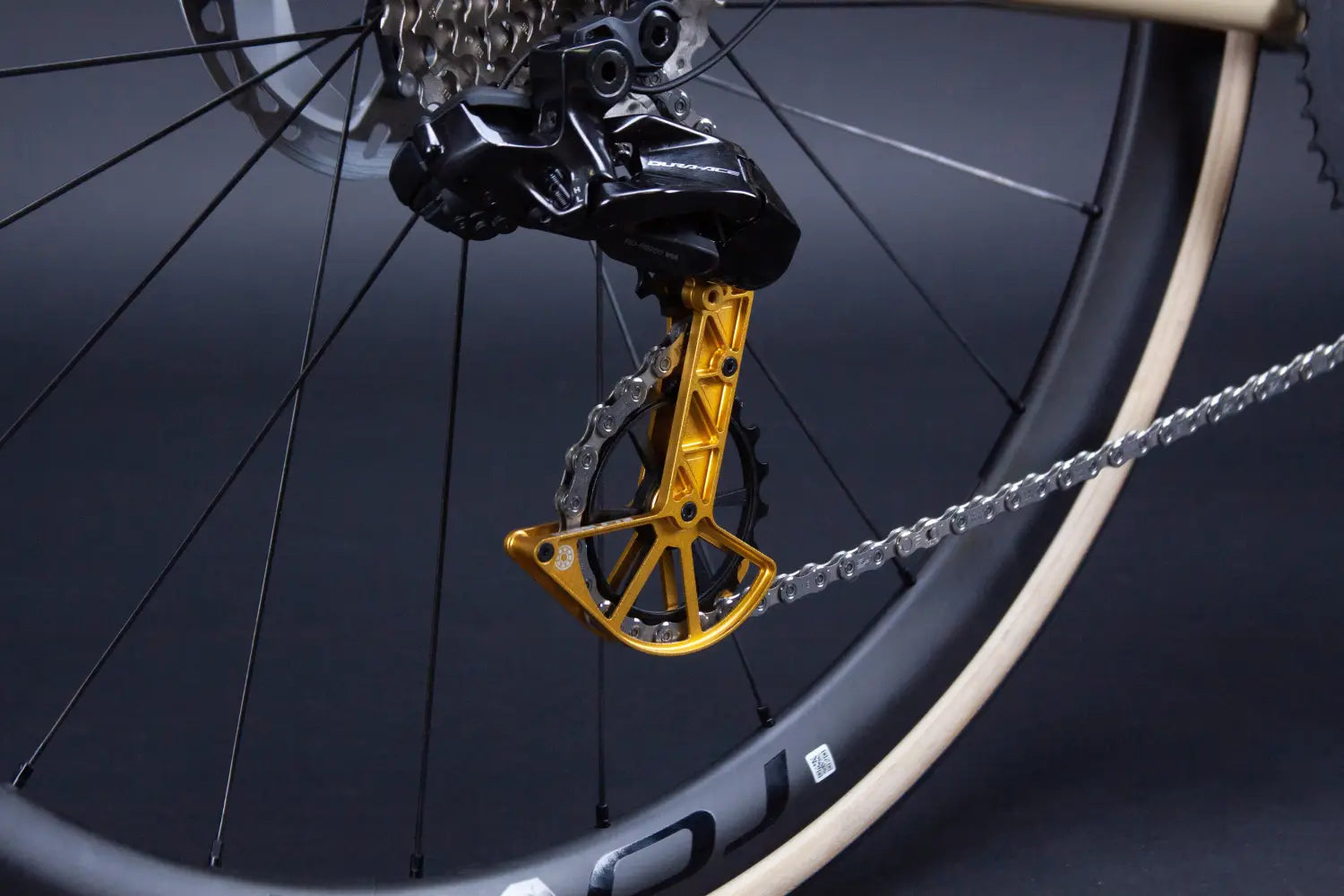
Closing the Gap: Introducing the ST Line
As the Kolossos became a global bike upgrade, I realized we had a new challenge. We had riders who wanted the mechanical advantages of the oversized cage—the stiffness and the reduced chain wrap—but were perhaps less concerned with the marginal gains of ceramic or the performance gains felt like overkill for their budget.
This led to the birth of our ST (Steel) bearings, specifically designed for our Kolossos ST cages.
|
Feature |
Kogel Ceramic |
Kogel CR (Ceramic) |
Kogel ST (Steel) |
|
Ball Material |
Silicon Nitride Ceramic |
Silicon Nitride Ceramic |
Stainless Steel |
|
Race Material |
Hardened Chrome Steel |
Hardened Stainless Steel |
Hardened Stainless Steel |
|
Best For |
Mechanical Efficiency |
Max Watt Savings & Weather Resistance |
Value & Durability |
|
Maintenance |
Moderate, pay attention after riding in wet conditions |
Annual Service or sooner if contaminated |
Moderate, Service after riding in wet conditions for longest lasting results |
The ST line is our Value Proposition. By using high-quality steel balls and races, we can offer the Kolossos at a more accessible price point. You still get all the benefits from the oversized pulley geometry and the rock-solid stiffness of our aluminum cage, but with a bearing that is robust and easily serviceable. Fun fact: The ST bearings share all components with the top of the line CR bearing, minus the ceramic balls.
It’s the perfect entry point for the rider who wants enter the Kogel eco system and the shifting precision of an oversized system without the premium price tag of a full ceramic setup.
Evolution is in our DNA
From those first chrome-steel ceramic bearings in 2014 to the evolution into CR and ST lines of today, our goal remains the same: making sure your drivetrain is never the thing holding you back. We’ve learned that "best" is subjective—sometimes "best" means the fastest bearing on earth (CR), and sometimes "best" means the smartest performance-per-dollar upgrade (ST).
Whichever you choose, you’re riding on ten years of trial, error, and a whole lot of miles in atrocious conditions.
Ride on,
Ard

